01 / START WITH THE PEOPLE
Over in the Desert
Mary Ann Graves and John Snyder find a moment of possibility on the trail. An intimate introduction to the project’s romantic and musical voice.
Watch on YouTube ↗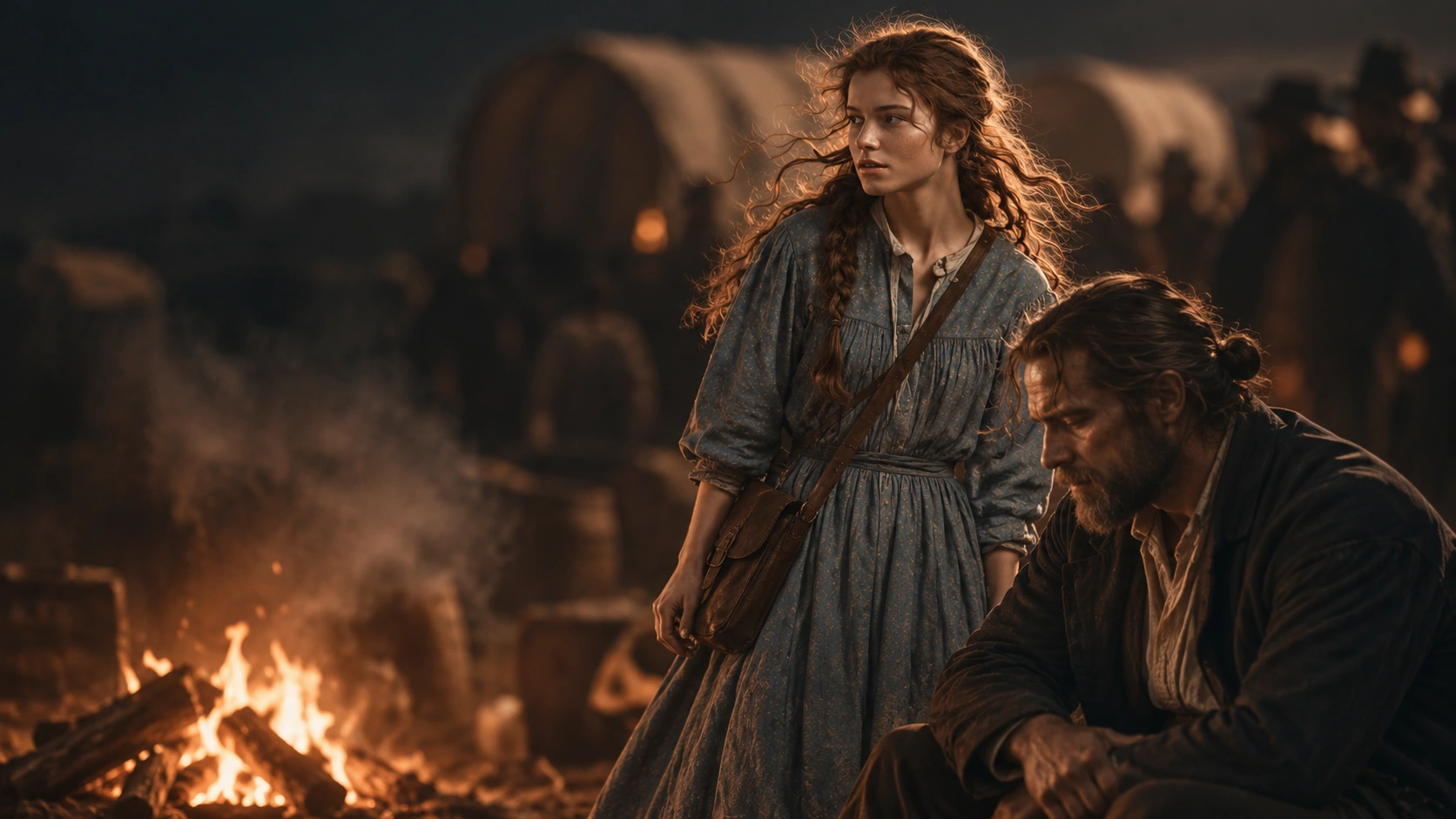
ONE WARM LINE / AN INVITATION TO COLLABORATE
When a promised shortcut strands emigrant families in the Sierra winter of 1846, an exiled father must find a way back while his daughter discovers the courage to keep their family alive.
An original historical musical.
A cinematic limited-series vision.
Seeking partners for the next stage.
VISUAL DEVELOPMENT / ONE WARM LINE
One Warm Line is an original historical musical and cinematic limited-series project following the Donner–Reed journey and the transformation of California. A father and daughter give an epic story its human heart.
Music carries the choices that change lives: the promise of a new beginning, a crowd persuaded, a family divided, a community moved to act. The story reaches beyond the mountain camps into Mexican California, Indigenous homelands, and a country being remade by conquest.
THE WORK ALREADY EXISTS
An extensively developed libretto and episodic screenplay, a substantial song catalog, cinematic music films, staging concepts, character studies, and an illustrated project packet.
Collin Poseley & Nick Almond
Skyrider Storyworlds
02 / WHY THIS WORK?
Start with two contrasting moments: a private connection on the trail, then a community called to action. These cinematic music films introduce the songs and visual imagination behind OWL.
01 / START WITH THE PEOPLE
Mary Ann Graves and John Snyder find a moment of possibility on the trail. An intimate introduction to the project’s romantic and musical voice.
Watch on YouTube ↗02 / THEN SEE A COMMUNITY ACT
In San Francisco, Reed and his allies rally help for the people stranded in the mountains. Ensemble energy turns a private need into a public cause.
Watch on YouTube ↗03 / GO DEEPER INTO THE WIDER CONFLICT
At Sutter’s Fort, Reed confronts the price of action while his family waits beyond the mountains. A cinematic storyboard exploring duty, war, and divided loyalties.
Watch on YouTube ↗03 / THE INVITATION
We are seeking producing partners and creative collaborators to bring the work to an audience: a theatrical reading or workshop, and a separately developed screen adaptation.
A live ensemble, intimate storytelling, and a visual language of movement, light, and projection. The current staging exploration centers on theatre in the round.
We’d like to meet producers, directors, book writers and dramaturgs, music directors, collaborating composers, arrangers, orchestrators, musicians, and performers.
The next step is a developmental reading or workshop, with an independent Sacramento presentation among the paths we are exploring.
Explore the stage vision ↗A historical ensemble drama with music at its heart. The screen adaptation expands from the wagon road and mountain camps into the struggle for California.
We’d like to meet independent producers, experienced television writers, directors, and creative partners who can help shape and package a limited series.
The next step is a focused conversation about the treatment, screenplay, musical approach, and a viable production path.
Read the short screen treatment ↓We also welcome historical and Indigenous cultural collaborators to deepen the work’s research, perspective, and portrayal.
04 / TAKE A CLOSER LOOK
Start with the overview. Explore the screen story. Then open the illustrated packet for the wider world of characters, music, and visual development.
One page · PDF
02 / THE SCREEN STORYTwo pages · PDF
03 / THE VISUAL WORLD35 pages · PDF · 21.1 MB
ONE WARM LINE / SCREEN TREATMENT
When a promised shortcut strands emigrant families in the Sierra winter of 1846, an exiled father must find a way back while his daughter discovers the courage to keep their family alive.
A proposed historical musical limited series, with a five-part narrative arc. The Donner–Reed migration is the emotional spine; Mexican California, Indigenous homelands, and American expansion form the larger world. Episode structure and running times remain open to development with a screen partner.
The story moves between the intimate and the immense: a child watching her father, a wagon community making a fatal choice, a winter landscape that refuses to yield. Songs reveal persuasion, longing, conflict, and collective action. The musical language belongs to the drama, carrying what dialogue alone cannot.
James Reed begins with confidence in his own judgment and the promise of California. His ambition helps carry his family west, but his killing of John Snyder breaks the company’s fragile order. Exile forces him to become a man whose worth depends on returning for others.
Virginia Reed begins inside her father’s dream. Separation and winter ask her to find a courage of her own. Peggy Reed’s determination holds the family together, while Mary Ann Graves’ love for Snyder makes the consequences of Reed’s violence painfully personal.
The Donners, Breens, Murphys, and Kesebergs bring competing needs, loyalties, and losses to the company. Beyond it, Californios and Indigenous characters widen the frame: the emigrants’ destination is already someone’s home, and the struggle for California is already underway.
The current screenplay opens in Yerba Buena in February 1847, with the machinery of communication and rescue moving through a port under the American flag. The journey then opens outward into the world that brought these people together: families seeking a future, promoters selling a route, and California caught in a struggle for power.
The audience encounters the dream before its cost. On the prairie, celebration, courtship, labor, and loss begin to bind strangers into a traveling community. The question is whether that community can withstand the choices made in its name.
Hastings’ promised shortcut offers Reed and the company a seductive bargain: a shorter road to a better life. Warnings compete with ambition. The passage through difficult country spends the time, strength, and trust that winter will demand.
Affection grows between Mary Ann Graves and John Snyder. When a confrontation ends in Snyder’s death at Reed’s hand, the road becomes a court. Reed is sent into exile, leaving Virginia and Peggy to continue without him. Father and daughter now move through separate stories, bound by a promise of return.
Snow closes the mountain passage. The families shelter at the lake and Alder Creek as food dwindles and the company fragments into smaller circles of responsibility. The Forlorn Hope sets out on snowshoes to find help. Hunger, death, and the extremity of survival test every belief the travelers brought west.
In California, Reed confronts military demands and the practical difficulty of organizing a rescue. Help must be persuaded, financed, supplied, and carried back into the snow. The journeys outward and inward begin to answer one another: survival depends on people choosing to return.
Successive relief parties bring survivors down from the mountains. Reunions do not erase the people who are missing. The final movement follows the burden of living afterward: grief, accusation, damaged reputations, and the work of beginning again.
The closing question is what one person owes another after the familiar rules have failed. One Warm Line finds its hope in acts of care, in the names people keep, and in the decision to go on.
A treatment of the developing screen adaptation. Scenes, dialogue, and songs are a dramatic interpretation of historical events.
The original illustrated packet, June 2026. Browse the pages below or open the PDF ↗.
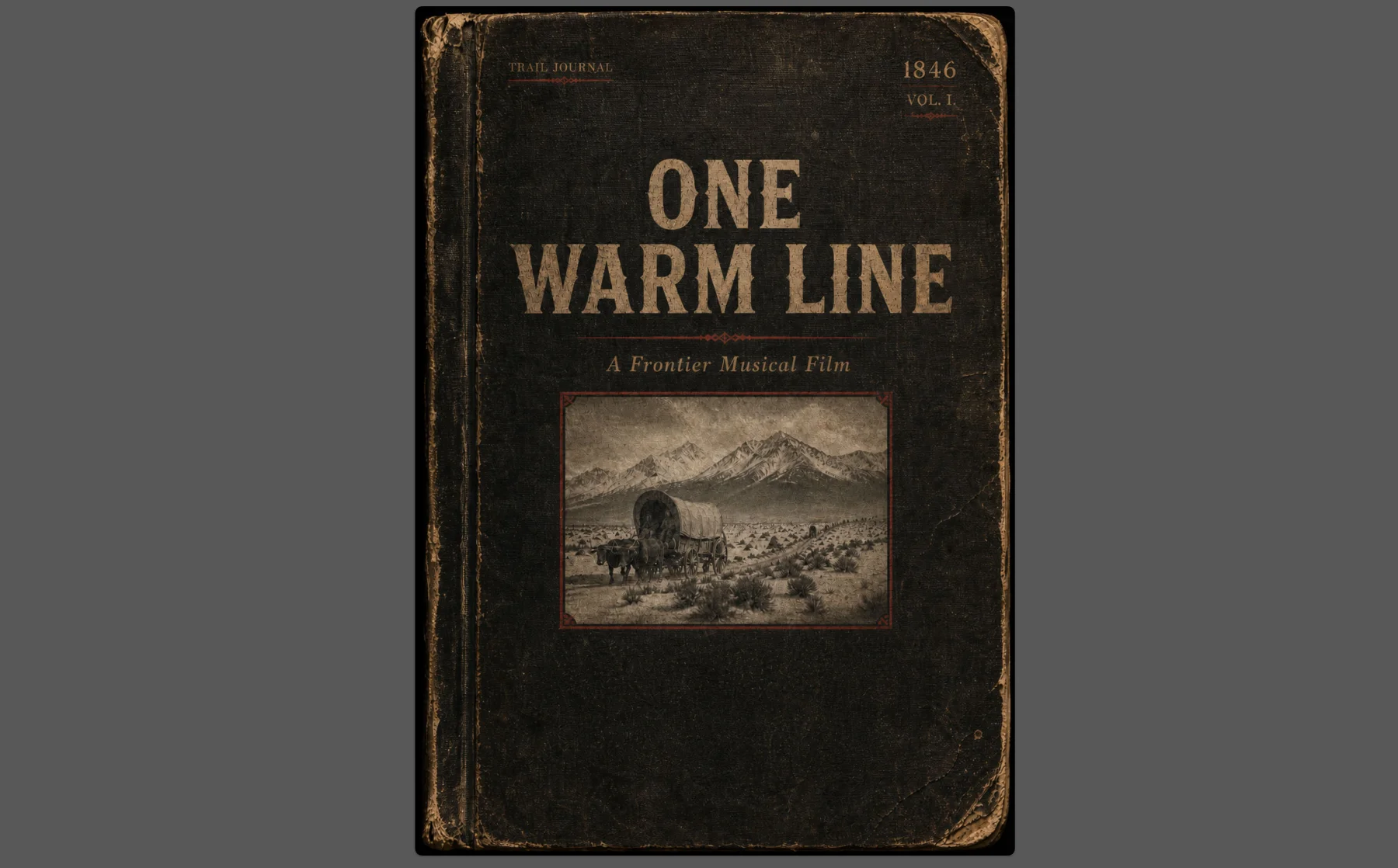
Use the arrow controls or choose a thumbnail. The downloadable PDF preserves the original page design and searchable text.
Complete scripts, additional music, and supporting production materials are available for professional consideration.
05 / HOW DO I GET INVOLVED?
See a place for your experience in this story?
Tell Collin what draws you to the work, whether your interest is stage or screen, and what you might bring to the conversation. An introduction to the right person is welcome, too.
Start a conversation ↗Collin Poseley
poseley.collin@gmail.com
Developed through writing, historical research, and AI-assisted creative tools. The recordings and imagery present the creative vision; professional collaboration will shape its realization in performance.